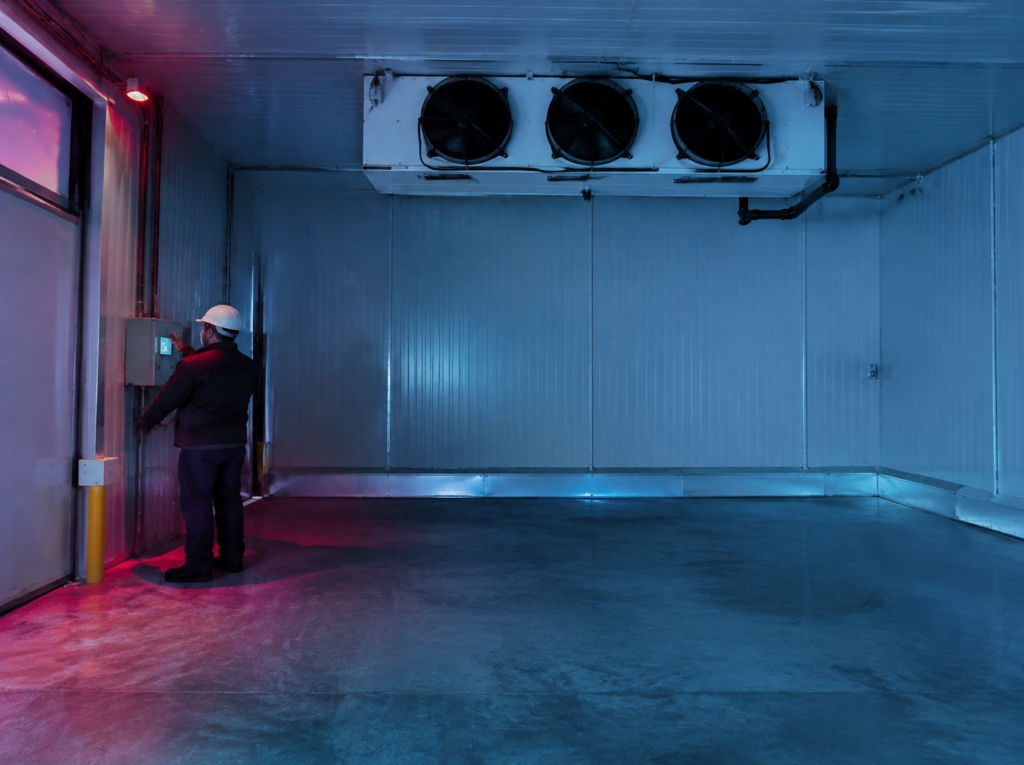
A walk-in cooler or freezer is one of the most important pieces of equipment in a restaurant, grocery, food distributor, or warehouse. When it works, nobody thinks about it. When it doesn’t, product is lost, inspections fail, and operations stop.
Most cold storage problems trace back to decisions made before installation ever started. Answering a handful of questions up front will save you money on the install and for the life of the equipment.
1. What are you storing, and at what temperature?
A produce cooler, a meat cooler, and a frozen-food freezer have very different requirements. Temperature range drives the refrigeration system design, insulation thickness, door hardware, and defrost strategy. If you may change what you store in the future, plan for the most demanding use now — upgrading later costs far more.
2. How much product moves in and out each day?
Box size is only half the sizing equation. The refrigeration load also depends on how often the doors open, how much warm product is loaded at once, and how quickly it needs to be pulled down to temperature. A cooler that receives large deliveries of warm product needs more capacity than one that holds steady inventory.
3. Where will the box and the equipment go?
- Indoors or outdoors? Outdoor walk-ins need weatherproofing, a roof, and protection from Maine snow loads.
- Floor: Freezers typically need an insulated floor and may need heat protection under the slab to prevent frost heave.
- Condensing unit location: Indoor units add heat to your building; rooftop or outdoor units need clearances, access for service, and in Maine, the right low-ambient controls to run reliably in winter.
4. Is your electrical service ready?
Refrigeration equipment needs dedicated circuits, and larger systems may require three-phase power. Confirm available capacity early. An electrical upgrade discovered mid-project is one of the most common causes of delay.
5. What about drainage and defrost?
Evaporator coils produce condensate that has to go somewhere. Freezers need heated drain lines to keep condensate from freezing. Plan drain routing before the box is set, not after.
6. Remote monitoring and alarms
A temperature alarm that notifies someone after hours is cheap insurance compared to the cost of a lost load. For any operation where product value is significant, include monitoring in the original scope.
7. Who will service it?
Cold storage equipment needs regular maintenance — coil cleaning, door gasket and heater checks, refrigerant and electrical inspections. Choose an installer who will also maintain the system, and ask what preventative maintenance looks like before you sign.
Get the design right once
Cold storage is a long-term investment. Taking the time to answer these questions with a qualified contractor results in a system that holds temperature, uses less energy, and doesn’t surprise you with avoidable failures.
MacPherson Werks designs and installs walk-in coolers, freezers, and refrigerated warehouse systems throughout Maine. Contact us to talk through your project.
Have a question about your building?
MacPherson Werks is a veteran-owned commercial HVAC and refrigeration contractor serving all of Maine. We're happy to take a look and give you an honest recommendation.