Most commercial buildings in Maine are heated one of two ways: with hydronic systems, which move heat through hot water, or with forced-air systems, which move heat through ducts. Each has real strengths. The right choice depends on the building, how it’s used, and what else the HVAC system needs to do.
How each system works
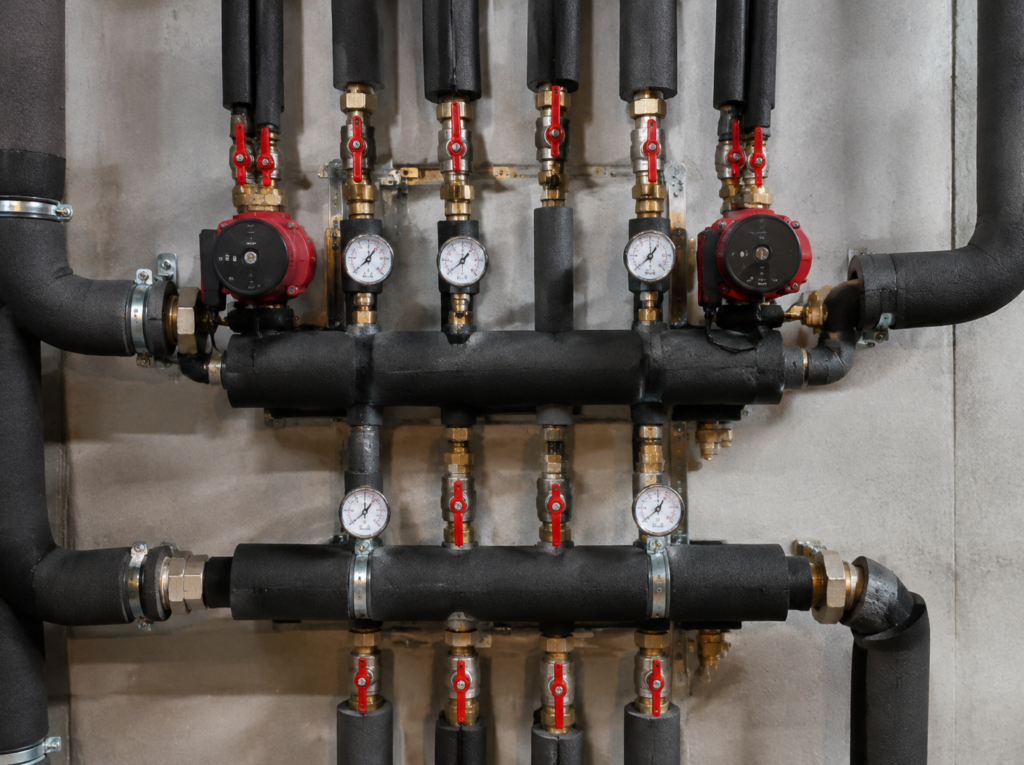
Hydronic heat uses a boiler to heat water, which is pumped through piping to baseboard, radiators, fan coils, unit heaters, or radiant floor tubing. Heat is delivered where the water goes.
Forced-air heat uses a furnace, rooftop unit, or air handler to heat air, which is blown through ductwork to the spaces being served. The same ductwork can also deliver cooling and ventilation.
Comfort
Hydronic systems — especially radiant floors — deliver quiet, even heat with fewer drafts and less temperature swing. They’re well suited to spaces where people sit or work in one place for long periods, and to high-bay shops and warehouses where warm air would otherwise collect near the ceiling.
Forced air responds faster to temperature changes and setbacks, which can be an advantage in spaces with variable occupancy.
Efficiency
Water carries heat far more efficiently than air, so hydronic distribution uses less energy to move the same amount of heat. Modern condensing boilers paired with low-temperature distribution can be extremely efficient.
Forced-air efficiency depends heavily on ductwork. Leaky or poorly insulated ducts — especially through unconditioned spaces — can waste a significant share of the heat produced.
Cooling and ventilation
This is where forced air has a clear advantage. If the building needs air conditioning and code-required ventilation, a ducted system can provide heating, cooling, and fresh air through one distribution network. A hydronic building that needs cooling will usually need a separate system for it.
Installation and lifecycle cost
- Up-front cost: Hydronic systems often cost more to install, particularly radiant floors.
- Operating cost: Hydronic systems usually cost less to run.
- Lifespan: Well-maintained boilers and piping often outlast forced-air equipment.
- Retrofits: Adding ductwork to an existing building can be difficult; so can adding piping. Existing infrastructure often drives the decision.
Many buildings use both
The best answer is often a combination: hydronic heat for perimeter zones, shops, or warehouse floors, and forced air or packaged rooftop units for spaces that need cooling and ventilation. A properly designed hybrid system puts each technology where it performs best.
Questions to ask
- Does the building need cooling now, or might it later?
- What distribution already exists, and what condition is it in?
- How are the spaces used — continuous occupancy, intermittent, high-bay, office?
- What fuel is available: natural gas or propane?
MacPherson Werks is licensed for both natural gas and propane and works on hydronic, radiant, and forced-air systems of every make. Contact us for an honest recommendation for your building.
Have a question about your building?
MacPherson Werks is a veteran-owned commercial HVAC and refrigeration contractor serving all of Maine. We're happy to take a look and give you an honest recommendation.