For a single building, an unexpected HVAC repair is an annoyance. Across a portfolio of five, fifteen, or fifty locations, unplanned repairs and replacements become one of the hardest line items to forecast — and one of the easiest to overspend on.
The organizations that budget HVAC well don’t have luckier equipment. They have better information and a plan. Here’s how to build one.
Start with a complete equipment inventory
You can’t budget for what you haven’t documented. For every location, record:
- Each piece of heating, cooling, and refrigeration equipment
- Make, model, serial number, and capacity
- Install date or estimated age
- Current condition and recent repair history
- Refrigerant type, which matters as older refrigerants become more expensive to service
Many portfolios discover during this step that they have far more equipment — and far older equipment — than they realized.
Forecast replacements by expected life
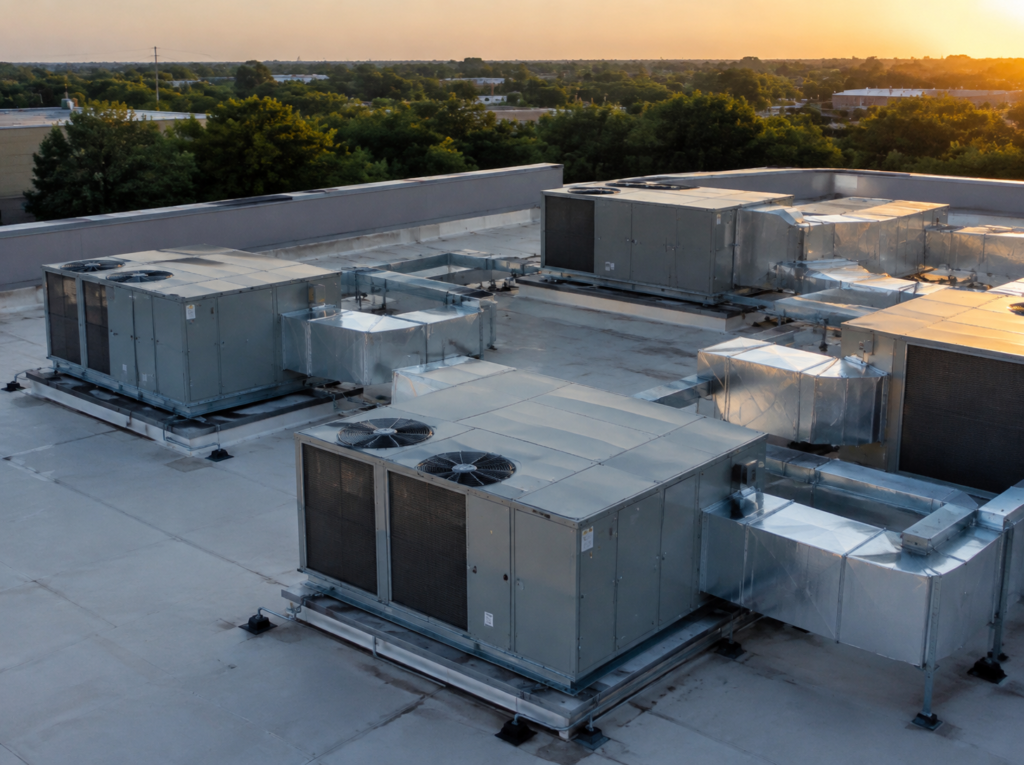
Commercial HVAC equipment has reasonably predictable lifespans when maintained. Rooftop units, boilers, furnaces, and condensing units each have typical service lives, and condition data tells you which units are aging faster or slower than average.
Map every unit onto a five- to ten-year timeline. The result is a capital replacement schedule that shows which years will be heavy and which will be light — and lets you smooth spending by replacing some equipment slightly early or deferring others with confidence.
Separate the three kinds of HVAC spending
- Preventative maintenance: predictable, scheduled, and the easiest cost to control.
- Repairs: partly unpredictable, but strongly reduced by good maintenance.
- Capital replacement: large but forecastable from your inventory.
Budgeting each category separately makes it obvious when repair costs on a particular unit start to approach the cost of replacing it.
Use preventative maintenance to shrink the unpredictable part
A consistent maintenance program is the single most effective tool for budget predictability. Regular inspections catch failing components before they cause breakdowns, keep equipment running efficiently, and extend service life — which pushes capital replacements further out.
Just as important, every maintenance visit generates condition data that keeps your forecast accurate.
Standardize where you can
Across multiple locations, standardizing maintenance frequency, reporting format, and — when replacements come due — equipment types can significantly reduce cost. Technicians work faster on familiar equipment, parts inventories shrink, and comparisons between sites become meaningful.
Work with one accountable contractor
Juggling a different HVAC vendor at every location means inconsistent service, inconsistent reporting, and no single view of your portfolio. A single contractor who services every site can provide one inventory, one report format, and one forecast.
A simple budgeting framework
- Maintenance: fixed annual cost based on equipment count and visit frequency.
- Repairs: a reserve based on equipment age and condition, reviewed quarterly.
- Capital: the replacement schedule from your inventory, updated annually.
MacPherson Werks provides preventative maintenance programs for multi-location operators across Maine, with consistent scheduling and a written report after every visit. Contact us to start building a predictable HVAC budget.
Have a question about your building?
MacPherson Werks is a veteran-owned commercial HVAC and refrigeration contractor serving all of Maine. We're happy to take a look and give you an honest recommendation.